While it may be feasible to copy and paste many things from other organizations, certain qualities we observe in higher performing school systems defy a somewhat cookie-cutter approach to improving performance. We may be able to copy and paste select procedures, policies, processes and key controls. However, the culture in other school systems is a deciding factor (all things equal) that cannot be copied and pasted from higher performing organizations. If the culture in select work units of a school system are not aligned with strategies and leadership, then executive management will experience head winds in achieving optimum levels in overall performance, in addition to improved internal controls.
Paying attention to the culture factor is one of various areas where best practices in the private sector overlap with the administration and management of a school system. The Leader’s Guide to Corporate Culture, How to Manage the Eight Critical Elements of Organizational Life, by Boris Groysberg, Jeremiah Lee, Jesse Price and J. Yo-Jud Cheng (Harvard Business Review, January/February 2018), contains insights on the linkage between organizational performance and culture. The example survey excerpted below from their article provides a high-level perspective on evaluating the multi-dimensional aspects of an organization’s culture.
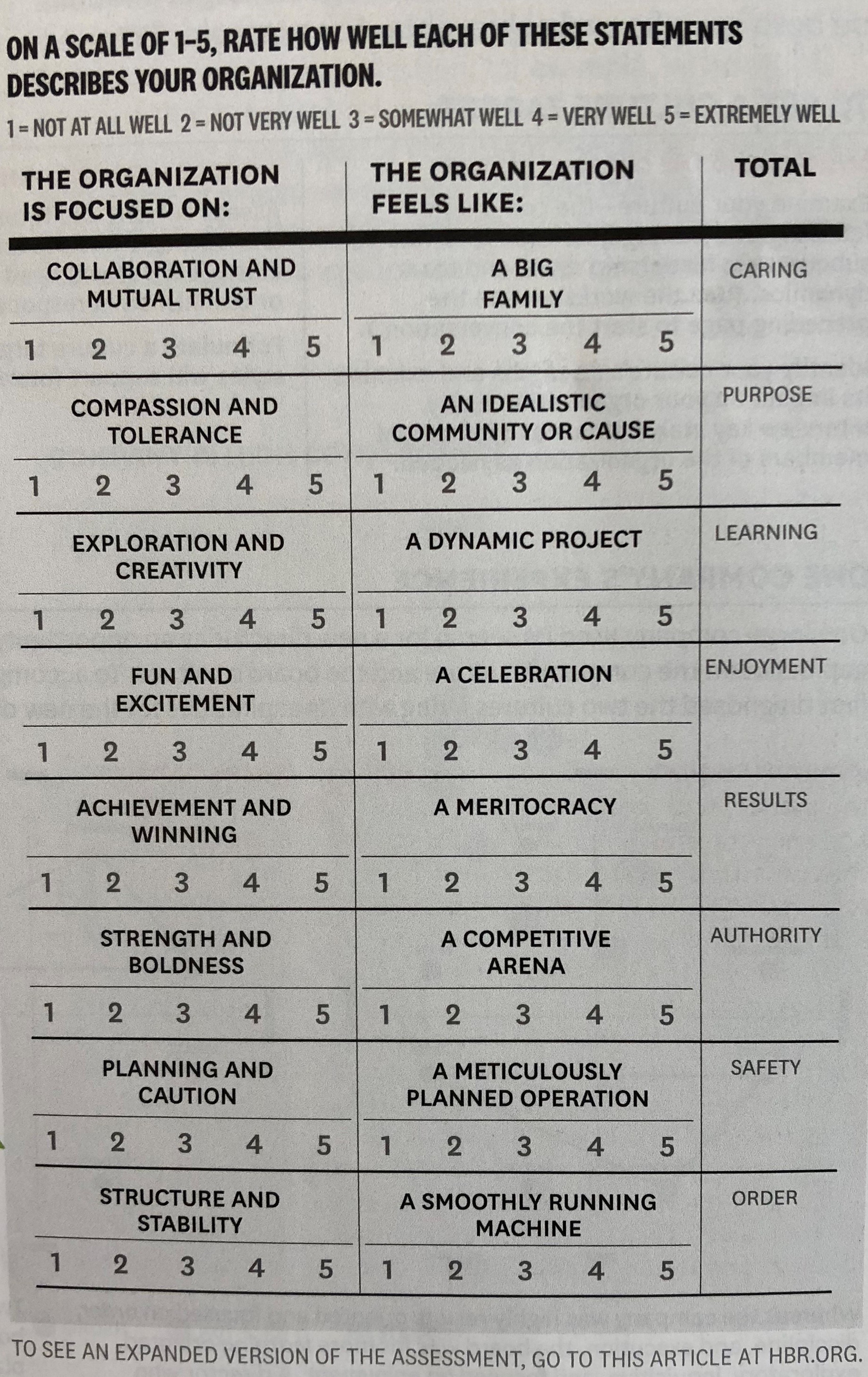
An outside consultant is recommended to mitigate inherent biases that would affect an attempt to evaluate your own organization’s culture. After making the decision to pursue culture change, executive management will need to accept and understand that changes in attitudes do not occur overnight and will require a long-term commitment over several years, in many cases, before significant results are achieved to measurably move the needle.